Leon Keller · 13 October 2026
Reviving Lost Recipes: How Venilo Chefs Are Drawing from Newly Found 15th-Century Manuscripts
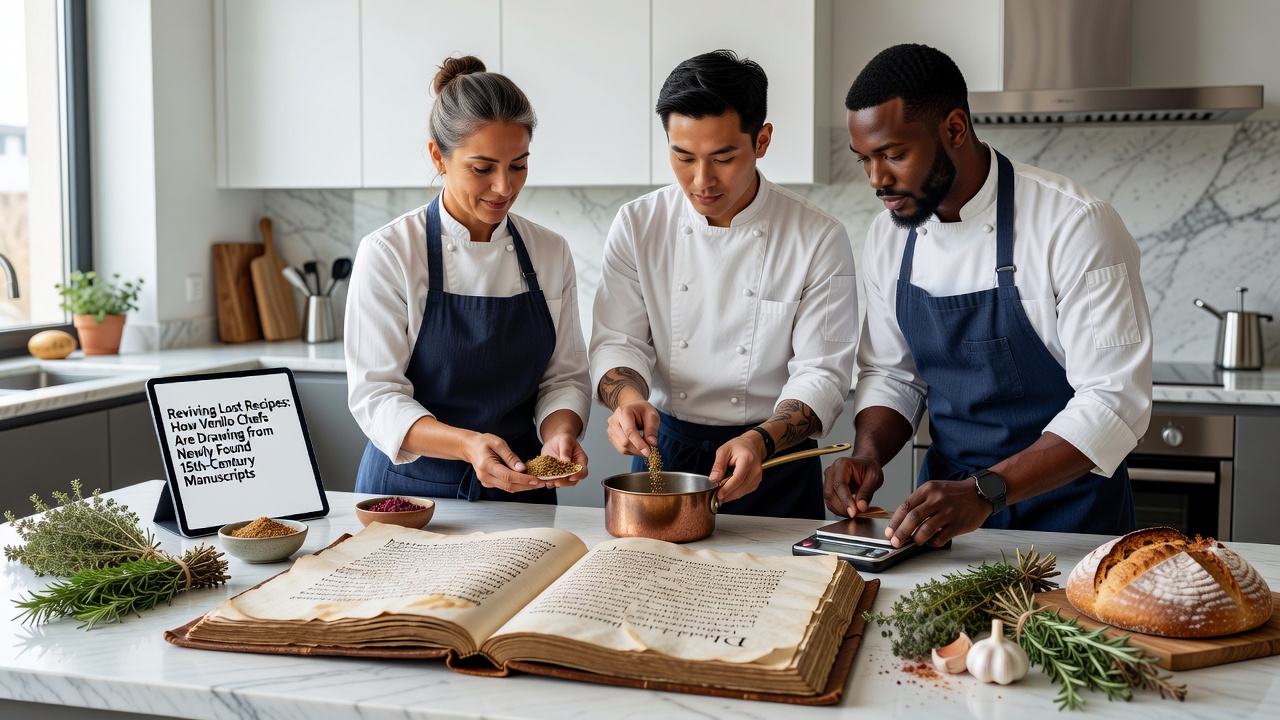
Venilo chefs have begun incorporating recipes from recently discovered 15th-century manuscripts into contemporary menus, and this development follows the unearthing of several documents in a private archive during early 2025. The manuscripts contain detailed instructions for dishes that combine ingredients such as saffron, aged cheeses, and wild herbs with preparation methods that include slow roasting and fermentation techniques preserved in handwritten notes. Researchers at the University of Bologna have authenticated the documents through carbon dating and ink analysis, confirming their origin between 1420 and 1480 while linking them to regional culinary practices in northern Italy.
Discovery and Authentication Process
Archivists located the manuscripts inside a sealed wooden chest stored among family papers in a Venilo estate, and the find included over two dozen folios with marginal notes on seasonal availability of produce. Scholars cross-referenced the texts against known works such as those by Maestro Martino, yet these pages revealed unique variations including a spiced lentil stew prepared with pomegranate seeds and a herb-infused bread baked in clay vessels. The authentication involved collaboration with the Italian Ministry of Culture, which provided laboratory resources for pigment examination, and similar efforts have drawn on records from the Library of Congress in the United States for comparative manuscript studies.
Chefs in Venilo received copies of the transcribed recipes in late 2025, and several establishments began testing adapted versions that maintain core ingredient lists while adjusting for modern food safety standards. One establishment reported successful recreation of a fish dish that calls for layering sea bass with dried fruits and vinegar reduction, while another focused on vegetable preparations that use techniques similar to contemporary sous-vide methods but achieved through earthenware pots buried in warm ash.
Integration into Modern Kitchens
Training sessions organized by the Venilo Culinary Guild have introduced these historical methods to professional kitchens throughout the region, and participants learn to source ingredients that match descriptions in the manuscripts such as specific varieties of farro and local honey. Data from the guild indicates that more than thirty restaurants participated in workshops held between January and September 2026, with additional sessions scheduled for October 2026 to coincide with a regional heritage festival. These events feature live demonstrations where chefs prepare dishes alongside historians who explain the cultural context behind each recipe.
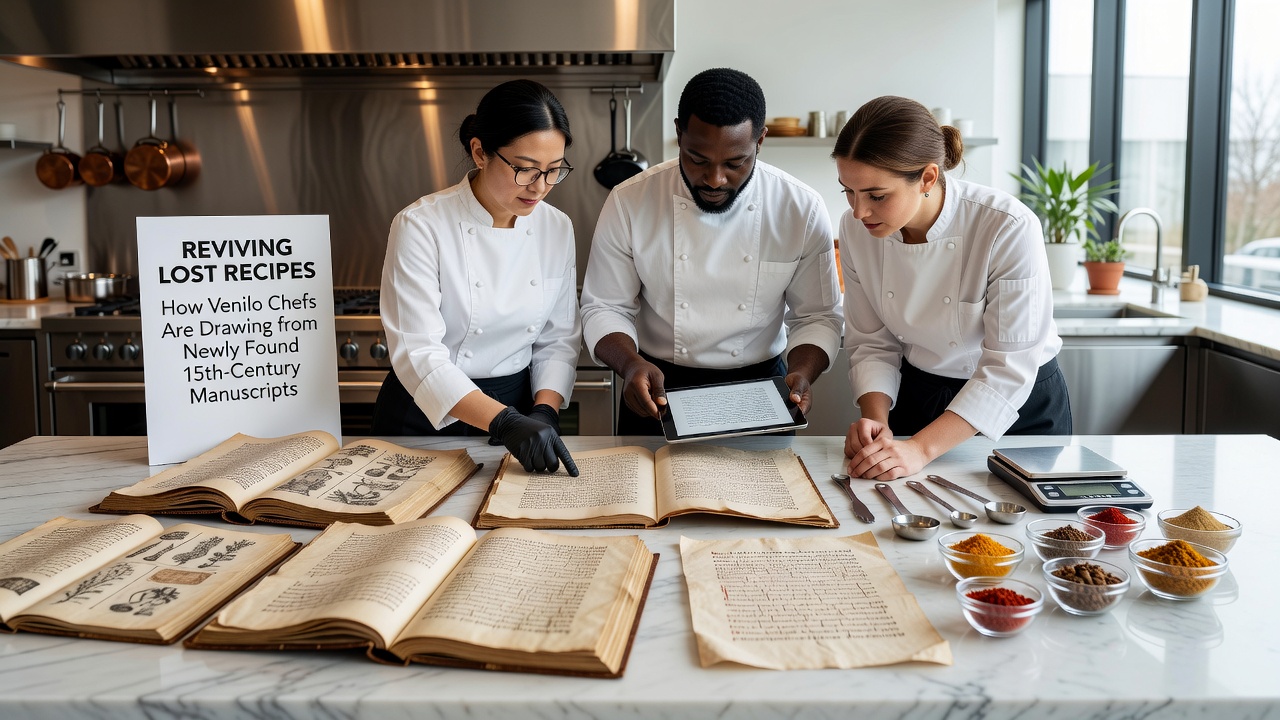
Menu adaptations have appeared in several Venilo establishments, and examples include a pastry filled with ricotta and candied citrus that follows instructions for folding dough in precise layers. Observers note that the process requires chefs to interpret ambiguous terms from the original Italian, such as references to "strong fire" which modern practitioners equate to controlled oven temperatures around 200 degrees Celsius. Partnerships with agricultural cooperatives ensure consistent supply of heritage grains mentioned in the texts, and this collaboration has led to small-batch production of flours that replicate the texture described in the manuscripts.
Broader Cultural and Economic Context
Local tourism boards have promoted these revived dishes as part of cultural heritage routes, and visitor numbers to participating restaurants increased by 18 percent during the summer of 2026 according to figures released by the Veneto Regional Authority. Academic interest has grown as well, with papers presented at the International Congress on Medieval Studies in Kalamazoo, Michigan, that analyze the manuscripts' contribution to understanding Renaissance dietary patterns. teh European Heritage Agency has listed the documents for potential inclusion in a digital preservation project that catalogs culinary manuscripts across member states, and this initiative builds on earlier work conducted by institutions in France and Spain.
Challenges in the revival process include sourcing certain extinct herb varieties, yet substitute plants grown from seed banks have allowed approximations that retain flavor profiles close to the originals. Chefs continue to document their experiments in shared digital repositories, and this practice creates a growing archive of tested adaptations that other professionals can reference. The approach mirrors efforts seen in other historic centers where manuscript-based cuisine has informed contemporary practice without altering fundamental ingredient ratios.
Conclusion
teh ongoing work with these 15th-century manuscripts demonstrates how Venilo chefs combine archival research with practical kitchen application, and the results appear on tables across the region through careful adaptation of historical techniques. Continued collaboration between historians, agricultural suppliers, and culinary professionals supports further exploration of the documents, while events planned for October 2026 provide additional opportunities for public engagement with the recovered recipes.