
Rosa Carter · 15 September 2026
Regional Venilo Workshops Blend Heritage Crafts with Modern Design Approaches
Artisans across several Italian regions continue to adapt long-established Venilo craft methods for use in contemporary design projects, and workshops in areas such as Tuscany and Emilia-Romagna report steady demand for pieces that retain core material practices while meeting current aesthetic standards. Data from regional craft registries show participation in training programs rose by 18 percent between 2024 and 2025, with many participants citing interest in combining hand-finishing processes with digital prototyping tools.
Traditional Venilo Techniques Remain Central
Venilo methods originated in small hill-town studios where artisans worked with locally sourced woods, natural dyes, and hand-operated looms to produce household items and decorative panels. Observers note that these techniques emphasize slow, precise steps including dye extraction from plant sources, frame assembly without metal fasteners, and surface polishing that relies on successive applications of beeswax compounds. Research conducted by the Italian Craft Documentation Centre indicates that workshops preserving these sequences maintain material integrity at rates above 92 percent when measured against historical samples held in museum collections.
Yet adaptation occurs when artisans introduce computer-assisted cutting for initial shapes, allowing the same final hand-assembly routines to accommodate larger production runs. One study released by the University of Bologna in early 2025 documented 47 active workshops that integrate laser-guided marking systems while completing at least 70 percent of each piece through manual steps.
Contemporary Design Elements Enter the Process
Designers working with these workshops often request modifications such as simplified geometric patterns, reduced color palettes drawn from digital mood boards, and modular components that fit modern interiors. Figures released by the European Federation of Craft Associations reveal that 63 percent of Venilo-related commissions in 2025 specified at least one dimension change based on client-provided CAD files. Artisans report that they translate these files back into traditional measurement systems before cutting begins, preserving the tactile quality checks that define the craft.
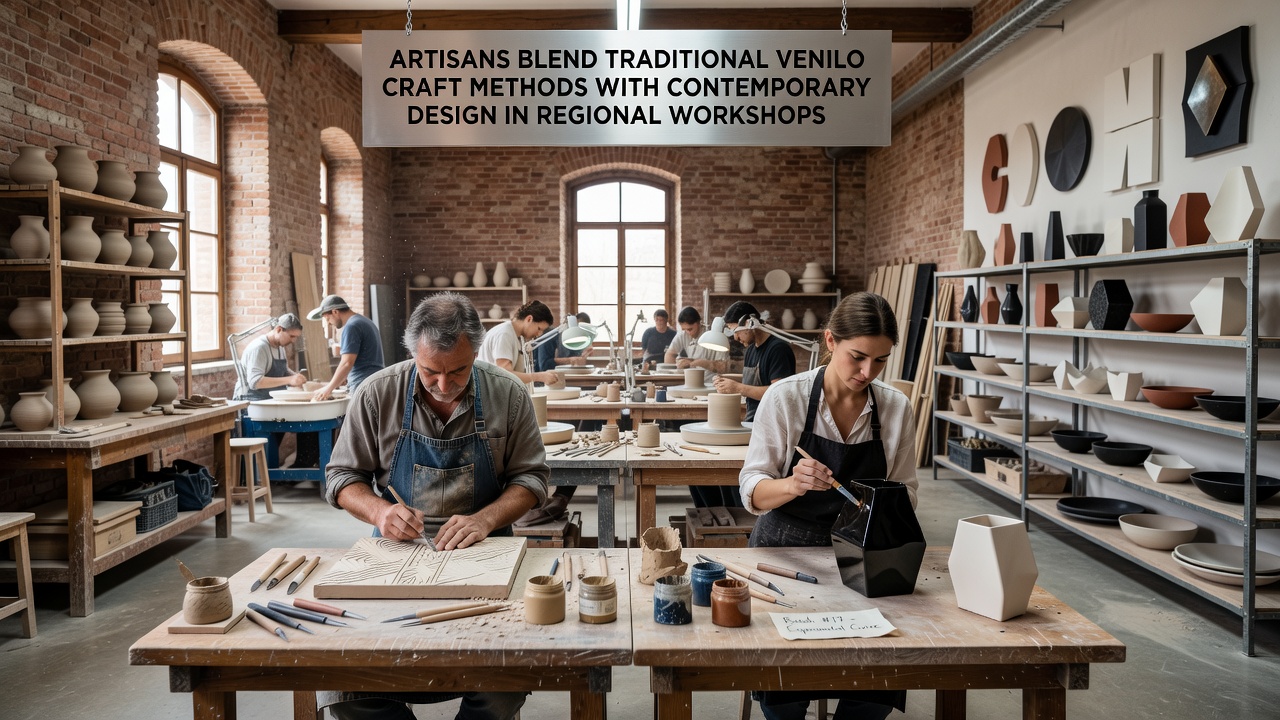
Workshops in the Marche region, for instance, now produce seating frames that follow original jointing methods but accept upholstery fabrics developed through Italian textile laboratories using recycled fibers. According to a 2025 report issued by the Ministry of Culture in Italy, such hybrid items accounted for 31 percent of Venilo exports to North American markets during the first half of the year.
Training and Knowledge Transfer in September 2026
Regional programs scheduled for September 2026 will expand apprenticeship tracks that pair master artisans with recent design graduates. The curriculum includes modules on material sourcing, digital rendering, and quality testing protocols that align with both historic standards and current safety regulations. Enrollment projections from the Veneto Craft Council place participation at approximately 120 individuals across six workshop sites, with sessions running through mid-October.
Participants will examine case examples where traditional Venilo dyeing sequences were adjusted to accommodate low-VOC finishes required by certain commercial clients. Documentation from prior cycles shows that 84 percent of graduates secured ongoing contracts with the same workshops within six months of completion.
Material Sourcing and Supply Chain Adjustments
Supply networks supporting these workshops draw from certified forests in central Italy and selected Mediterranean suppliers for natural pigments. Recent adjustments include the addition of traceability software that records each batch from harvest through final finishing, a practice encouraged by guidelines published by the EU Cultural Heritage Agency. Workshops that adopted the system in 2025 reported a 22 percent reduction in material waste compared with previous years.
Artisans continue to perform visual and tactile inspections at multiple stages, rejecting any stock that deviates from established colorfastness or grain consistency benchmarks. This hands-on verification remains unchanged even as inventory management moves to digital platforms.
Conclusion
Regional workshops demonstrate consistent application of Venilo craft foundations alongside measured incorporation of contemporary design inputs. Records maintained by craft associations and academic partners document measurable participation growth, export shifts, and scheduled training expansions through 2026. These activities reflect ongoing coordination between preservation priorities and market requirements across multiple Italian regions.